You Just Bought a House. Does the AC Actually Work?
Congrats on the new home. Seriously — that’s a huge deal.
But here’s the thing nobody warns you about: the air conditioning system hiding in your attic, closet, or backyard could be a ticking clock. And if you’re like most first-time buyers, you have no idea how old it is, when it was last serviced, or what “serviced” even means.
That uncertainty is completely normal. And it’s exactly the kind of thing that can cost you thousands of dollars if you ignore it — especially in Virginia, where summers are ruthless.
By the end of this guide, you’ll know how to figure out the age of your AC, what warning signs to watch for, and what a professional inspection actually covers. No jargon. No pressure. Just honest answers.

How to Tell How Old Your Air Conditioning System Is
This is the first question to answer. The age of your system tells you almost everything about what to expect.
Find the Serial Number — It’s Telling You Something
Every air conditioning unit has a data plate on the outside of the cabinet. It lists the brand, model number, and serial number. The serial number is your best friend here.
Most manufacturers encode the manufacturing date inside the serial number. For example, a Carrier unit with a serial number starting with “1219” was likely made in December 2019. A Bryant unit might use the first four digits to show the week and year.
You can also Google “[your AC brand] serial number date decoder” and find the exact format for your unit. Takes about two minutes.
What If the Unit Has Been Replaced But the Air Handler Hasn’t?
Here’s something most people don’t realize: your air conditioning system has two main parts — the outdoor condenser (the big metal box outside) and the indoor air handler or furnace (the unit inside that blows the air). They’re designed to work together.
If a previous owner replaced just one piece, those two components might be mismatched in age or efficiency. That’s a real problem. A mismatched system works harder than it needs to, breaks down faster, and drives up your energy bills every single month.
This is exactly why a professional inspection matters, not just a quick look at the outdoor unit.
What 15 Years Means for Your Air Conditioner
Look, 15 years is the number. Most central air conditioning systems are designed to last between 15 and 20 years — with proper maintenance. Without it? You might be looking at 12 years or less before major components start failing.
Here’s a quick breakdown of what age typically means for your system:
| System Age | What to Expect | Recommended Action |
|---|---|---|
| 0–5 years | Near-new efficiency, low risk | Annual maintenance tune-up |
| 6–10 years | Mid-life, generally reliable | Annual tune-up, watch for signs |
| 11–15 years | Aging, efficiency dropping | Inspection + repair vs. replace conversation |
| 16–20 years | High replacement risk | Budget for a new system |
| 20+ years | On borrowed time | Replace soon — don’t wait for failure |
If your system is 12 years old or older and you have no idea when it was last serviced, that’s not a small thing. That’s something you need answered before the first heat wave hits.
The good news? An air conditioning inspection can tell you exactly where you stand — no guessing required.
Warning Signs Your AC Is Already Struggling
You don’t have to wait for a breakdown to know something’s off. Your system will usually tell you something’s wrong — if you know what to listen for.
The Sounds That Should Worry You
A healthy AC hums. It’s quiet and steady. If you hear banging, clanking, squealing, or a grinding noise coming from the outdoor unit or the vents, something is mechanically wrong. Don’t turn it up and hope it goes away.
Banging usually means a loose or broken part inside the compressor. Squealing often points to a worn belt or failing bearings. These aren’t problems that resolve on their own.
The Bills That Don’t Make Sense
If your electric bill jumps significantly in summer — and you haven’t changed your habits — your AC is working harder than it should. That’s usually a sign of low refrigerant, a dirty coil, a clogged filter, or a system that’s simply past its prime.
A system running at 70% efficiency costs you real money every month. Not dramatically — just quietly, consistently, month after month.
The Humidity Problem Nobody Talks About
Air conditioning doesn’t just cool your home — it removes humidity from the air. If your home feels sticky and clammy even when the AC is running, the system isn’t doing its full job.
That’s often a sign of low refrigerant or an oversized system that short-cycles — meaning it cools the air too fast, shuts off, and never runs long enough to pull out the moisture. It’s uncomfortable. And it can lead to mold problems over time.
What a Professional AC Inspection Actually Covers
Here’s what frustrates a lot of first-time buyers: they assume a home inspection covered their HVAC system. It usually didn’t. Not really.
A standard home inspection checks whether the unit turns on and blows cool air. That’s it. It doesn’t test refrigerant levels, measure airflow, inspect ductwork, evaluate the coil, or assess the electrical connections.
A real HVAC maintenance inspection from a qualified technician is a completely different thing. It typically includes checking refrigerant pressure and levels, cleaning the condenser coil, inspecting the electrical components and connections, measuring airflow and static pressure, checking the thermostat calibration, and assessing the overall age and condition of the system.
After that inspection, you should walk away with a clear picture of what you have, what it needs right now, and what you’ll likely need to plan for in the next few years. No guessing. No surprises hiding in the ceiling.
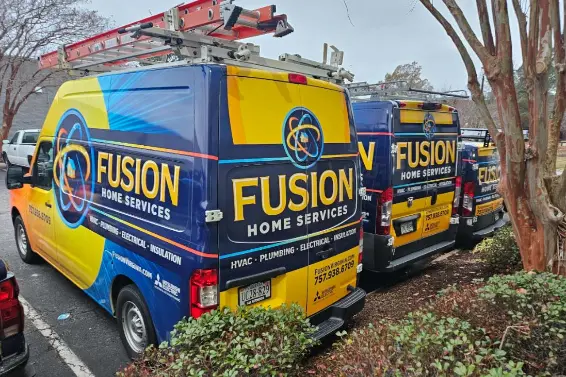
The technicians at Fusion Home Services explain everything they find in plain language. That’s not a marketing line — it’s the thing their customers mention most in their 900+ Google reviews.
Repair or Replace? Here’s How to Think About It
This is the question you’ll eventually face. And it can feel overwhelming if you don’t know how to frame it.
Here’s a simple rule of thumb used in the HVAC industry: multiply the age of your system by the estimated repair cost. If that number exceeds $5,000, replacement is almost always the smarter financial decision.
For example — if your system is 14 years old and needs a $400 repair, that’s $5,600. Time to have a serious replacement conversation.
But that rule isn’t the whole picture. You also need to factor in energy efficiency. A new system with a high SEER2 rating (that’s the efficiency standard) can cut your cooling costs by 20–40% compared to an older unit. Over time, those savings offset the replacement cost.
The exception is if your system is less than 10 years old and needs a minor repair. In that case, fix it and maintain it. Don’t replace what doesn’t need replacing.
One more thing: Virginia has energy efficiency rebate programs that can reduce the cost of a new system. Ask your contractor about current federal tax credits and utility rebates before you make any decision.
Frequently Asked Questions
How do I find out when my AC was last serviced?
Check with your home’s previous owner if possible. Ask your real estate agent to request maintenance records during closing — many buyers don’t know this is an option. You can also call a local HVAC company and give them the model and serial number. Sometimes service history is logged in the system’s registration.
Can I run my air conditioning without a filter to see if it works better?
Never. Running an AC without a filter allows dust and debris to coat the evaporator coil. Once that coil is dirty, your system loses efficiency fast and the coil can freeze up entirely. Always use a filter — even a basic one — and change it every 1–3 months depending on your household.
What SEER rating should I look for in a replacement system?
The federal minimum for new systems sold in the Southeast and Southwest U.S. (including Virginia) is now SEER2 14.3 for split systems. A SEER2 16 or higher is worth the additional upfront cost for most homeowners because of the long-term energy savings. Your contractor can run the numbers for your specific home size and usage.
Is it normal for my AC to run constantly during a Virginia summer?
On the hottest days (95°F+), it’s normal for your system to run for extended cycles. But if it’s running nonstop on a mild day, that’s a red flag — usually pointing to low refrigerant, a dirty coil, or a system that’s too small for the home. Have it checked before it fails entirely.
Stop Guessing. Start Knowing.
You bought a home. You deserve to know what you’re working with.
Your air conditioning system is one of the most expensive things in that house — and one of the easiest to neglect until something goes very wrong at a very inconvenient time. The fix isn’t complicated: get a professional eye on it before summer arrives.
Fusion Home Services has been doing exactly this in Hampton Roads for over 25 years. They’ll inspect your system, explain what they find, and give you honest options — not a sales pitch. That’s been their standard since day one.
Schedule your AC inspection today and go into summer knowing exactly where you stand. Because peace of mind about your home? That’s worth a lot.