PCS Orders and a Broken AC — Here’s How to Protect Your New Home
You just got PCS orders. You’ve got 30 days to figure out schools, movers, and a new zip code — and the last thing on your mind is the air conditioning system in a house you’ve never lived in.
But here’s the thing: Hampton Roads summers are brutal. High humidity, temperatures pushing into the 90s, and a housing stock where the average home is about 30 years old. That means one thing — a lot of aging AC systems quietly waiting to fail right when you need them most.
Sound familiar? You’re not alone. Military families moving into the Hampton Roads area face this exact situation every PCS season. And without a trusted local contractor already in your corner, it can feel like you’re flying blind.
This article walks you through everything you need to know about air conditioning as a military family in Hampton Roads — before you sign papers, after you get the keys, and through every deployment in between.

Why Hampton Roads Is Hard on Air Conditioning Systems
Virginia Beach, Chesapeake, Norfolk, Suffolk — these cities sit right on the Chesapeake Bay. Beautiful, yes. But the coastal humidity here doesn’t mess around.
Your AC isn’t just cooling air. It’s constantly pulling moisture out of it. That’s extra strain on the system, day after day, from May through October.
Older homes — and there are plenty of them in Hampton Roads — often have AC systems that were installed when Clinton was president. Efficient for their time. Not so much now. If the home you’re buying or renting has a system that’s 12 years or older, you’re inheriting someone else’s ticking clock.
Here’s what makes this worse for military families specifically: you don’t have the luxury of watching a system slowly decline over two or three seasons. You show up, you move in, and you need everything to work. Right now.
What to Check Before You Move In
Most home inspections give the AC a surface-level pass/fail. That’s not enough. A general inspector will tell you if the unit turns on — not whether it’s running efficiently, leaking refrigerant, or one heat wave away from quitting.
Before closing, ask for a dedicated HVAC inspection by a certified technician. This is different from your standard home inspection and goes much deeper.
A proper air conditioning inspection should cover the following:
The age and condition of the unit itself. Most AC systems last 12–15 years with good maintenance. Anything older deserves serious scrutiny — and possibly a replacement credit negotiated into your offer.
The refrigerant levels. Low refrigerant is a sign of a leak. Leaks don’t fix themselves. A top-off without finding and repairing the source is just a temporary band-aid.
The ductwork. In older Hampton Roads homes, ducts are frequently deteriorating, disconnected, or improperly sealed. You can have a perfectly good AC unit losing 25–30% of its output through leaky ducts.
The thermostat and airflow balance. Are all rooms getting adequate cooling? An unbalanced system works twice as hard and still leaves bedrooms feeling like an oven.
The PCS-Ready Home Comfort Checklist
Here’s a practical checklist built specifically for military families making the move into Hampton Roads. Use it before signing or immediately after move-in.
| Item to Check | Why It Matters | Red Flag | Action |
|---|---|---|---|
| AC unit age | Older than 12 years = end-of-life risk | No maintenance records available | Request full HVAC inspection |
| Refrigerant level | Low levels signal leaks | Technician suggests just “topping off” | Insist on leak detection first |
| Filter condition | Dirty filters kill efficiency fast | Filters haven’t been changed in months | Replace immediately on move-in |
| Duct condition | Leaky ducts waste up to 30% of cooling | Visible tears, disconnections, or gaps | Request duct blower test |
| Thermostat type | Smart thermostats save money | Old dial thermostat with no programming | Upgrade to programmable model |
| Outdoor unit clearance | Debris reduces efficiency | Unit surrounded by overgrown landscaping | Clear 2 ft. around all sides |
| Drain line | Clogged lines cause water damage | Water stains near the air handler | Flush with compressed air |
| Attic insulation | Poor insulation makes AC work harder | R-value below R-38 in Hampton Roads climate | Schedule insulation assessment |
What Happens When You’re Deployed
This one doesn’t get talked about enough. You get deployment orders. Your spouse is managing the house alone, maybe with kids. The last thing either of you needs is an AC system failing in July when it’s 95 degrees and humid.
Look, the anxiety around that scenario is real. And it’s preventable.
A home maintenance plan from a company you already trust is one of the smartest things you can do before deployment. Here’s what that buys you:
Scheduled seasonal checkups so the system gets inspected before summer hits — not after something breaks.
Priority service if something does go wrong, so your family isn’t waiting days for a technician.
A single number your spouse can call and trust, without scrambling to find someone on Google at 8pm on a Friday.
That last one matters more than people realize. When you don’t have local relationships, finding a trustworthy contractor in an emergency is genuinely stressful. Having one already locked in changes everything.
How Hampton Roads AC Compares to Where You Came From
If your last assignment was somewhere drier — or somewhere with cold winters — Hampton Roads is going to feel different. The cooling load here is significant. And it runs longer than most people expect.
| Climate Type | Avg. Cooling Season | Humidity Challenge | Annual AC Stress |
|---|---|---|---|
| Hampton Roads, VA | May–October (6 months) | Very High | High |
| San Diego, CA | June–September (4 months) | Low | Moderate |
| Colorado Springs, CO | June–August (3 months) | Low | Low |
| San Antonio, TX | April–October (7 months) | High | Very High |
| Bremerton, WA | July–August (2 months) | Low | Low |
Hampton Roads lands firmly in the “high stress” category for AC systems. What worked fine at your last duty station may not cut it here. Factor that into your expectations going in.
Choosing an AC Contractor When You Don’t Know Anyone
Here’s the brutal truth about being new to an area: you’re a target. Some contractors see a military family — someone who just moved in, doesn’t know the local market, and needs work done fast — as an easy upsell.
It’s frustrating to say that. But knowing it going in protects you.
When you’re evaluating HVAC companies in Hampton Roads, look for these things:
NATE certification. The North American Technician Excellence credential means the technician passed independent testing — not just a company training program. It’s the closest thing to a real standard in this industry.
Real reviews, and a lot of them. Not 20 reviews. Not even 100. Look for companies with hundreds of reviews over multiple years. That kind of track record is very hard to fake.
Transparent pricing. A trustworthy company will explain what they found, why it matters, and what it costs — before they do anything. If a technician is vague about pricing or pushes you to decide immediately, walk away.
Emergency availability. Hampton Roads summers don’t care about your schedule. A company with 24/7 service isn’t just a nice feature — it’s a necessity.
Frequently Asked Questions
How often should I have my air conditioning serviced in Hampton Roads?
Once a year minimum — and ideally before the cooling season starts in spring. Given Hampton Roads’ humidity and long summer, an annual tune-up keeps the system running efficiently and catches small problems before they become expensive ones. If you’re on a maintenance plan, this gets handled for you automatically.
My home inspector said the AC “passed” — does that mean it’s fine?
Not necessarily. General home inspectors check basic function. They’re not HVAC specialists. A unit that “turns on” can still have low refrigerant, deteriorating coils, or duct leaks that kill efficiency. For a home in Hampton Roads — especially one with an older system — a separate HVAC inspection is worth the investment.
What size AC unit does a Hampton Roads home need?
Size depends on square footage, ceiling height, insulation quality, window count, and sun exposure — not just a simple formula. An undersized unit runs constantly and still can’t keep up. An oversized unit short-cycles, leaving the air humid and uncomfortable. A properly sized system gets calculated through something called a Manual J load calculation. Any reputable company should offer this before recommending a replacement unit.
Is there a military discount for HVAC services in Hampton Roads?
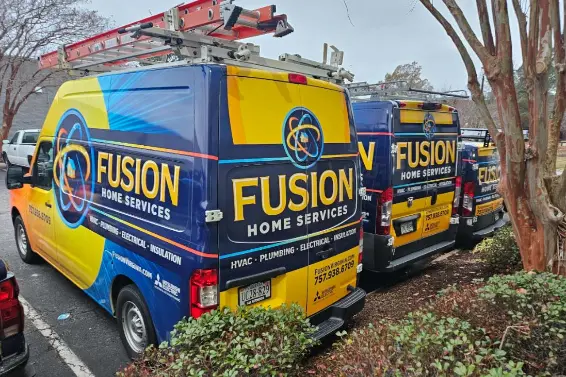
Yes — Fusion Home Services offers a military discount, and their PCS-ready home inspection package is specifically designed for families transitioning in and out of Hampton Roads. It covers HVAC, plumbing, electrical, and insulation in a single visit, so you get a complete picture of the home’s systems without coordinating multiple contractors.
Make Your Next PCS the One Where the AC Doesn’t Surprise You
You can’t control the orders. You can’t control the housing market. But you can absolutely control whether you walk into your new Hampton Roads home with a clear picture of what the air conditioning system looks like — and a trusted company already in your contacts when you need them.
Fusion Home Services has been serving Hampton Roads for over 25 years. More than 900 Google reviews. NATE-certified technicians. And a specific focus on serving military families who need honest answers fast — not a sales pitch.
Schedule your PCS home comfort inspection before the summer heat hits. One call. One company. Total confidence in your home.