Nobody Has a Free Saturday for This
Be honest. When was the last time you crawled under your house with a flashlight to look at your water lines?
Right. Never. And you shouldn’t feel bad about that.
Here’s the thing about a comprehensive plumbing audit: everybody agrees it’s smart, and almost nobody does one. It takes a half day you don’t have. It costs money you’d rather spend somewhere else. And the whole time you’re doing it, there’s a nagging worry that you’ll find something expensive, which is a great reason to just not look.
So the checking never happens. Then one Tuesday in February a supply line lets go in the crawl space, and you find out the hard way.
But here’s what matters, and it’s the part most Hampton Roads homeowners never hear: if you’re on a maintenance plan for your heating and cooling, a big chunk of that audit can happen for free, twice a year, by somebody who’s already standing in the right spot. You just have to ask. This article explains how that works, what gets caught, and what to do when the quick look turns up something real.

The Audit Nobody Can Afford to Do Properly
Let’s be fair to the idea first. A real whole-home plumbing inspection is genuinely useful. Somebody walks the supply lines, checks pressure, cameras the sewer lateral, tests the water heater, looks at every shutoff valve, and hands you a written report.
That’s a few hours of a licensed tech’s time, and it’s priced like it.
For most families, that’s a hard sell when nothing is currently leaking. You’re paying real money to be told everything is probably fine. And if you’re a military family two years into a three-year tour, or a landlord watching margins on four doors, or retired on a fixed income, that math gets harder still.
So the audit goes on the someday list. Where it stays.
Meanwhile, Somebody Is Already Under Your House
Now flip it around.
If you’ve got a maintenance agreement on your HVAC system, a technician is in your crawl space and your attic twice every year. Spring and fall. They’re already down there with a light, on their knees, looking at ductwork.
And guess what runs right alongside that ductwork? Your water supply lines. Your drain lines. In a lot of Virginia Beach and Chesapeake homes, the whole plumbing skeleton is sitting six inches from the equipment they came to service.
The tech is already there. The access panel is already open. The knees are already dirty.
Asking that person to spend ten extra minutes looking at pipes instead of only ducts is the single cheapest plumbing inspection available to you. It isn’t a full audit. It doesn’t replace a camera down the sewer line. But it catches the stuff that turns into a flooded floor, and it costs you a sentence.
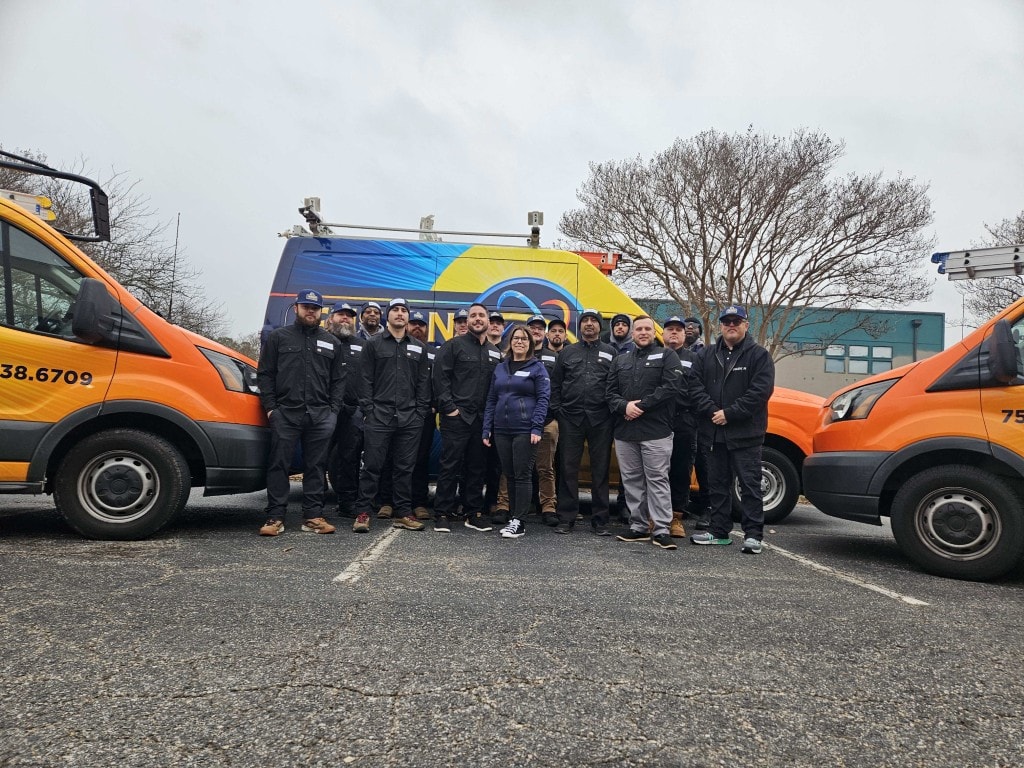
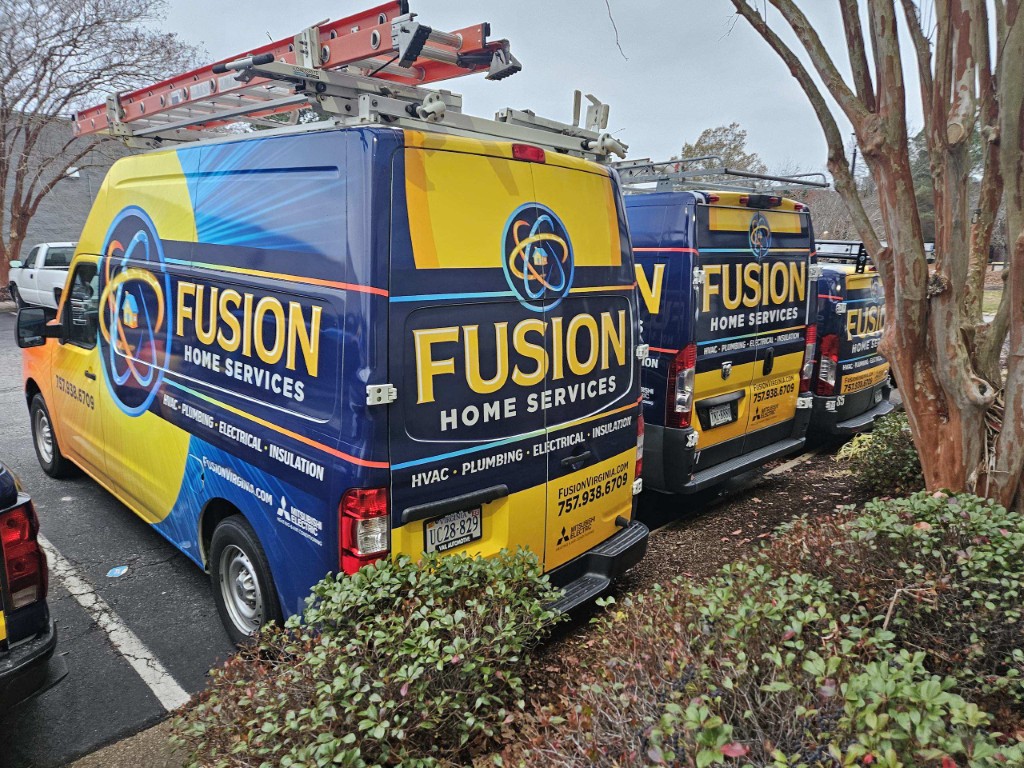
That’s the whole idea behind how Fusion Home Services runs its visits. Same company, same truck, four trades under one roof. The crew that seals your crawl space and services your air conditioner also handles your plumbing — which, if we’re being straight with you, is news to a lot of our own customers.
What Ten Extra Minutes Actually Catches
Here’s what a trained set of eyes can spot down there without any special equipment.
Green or white crust on a copper joint. That’s a slow weep that hasn’t become a leak yet. Damp or dark wood on a floor joist directly under a pipe run, which in our coastal soil is easy to confuse with normal crawl space humidity — but a dry-ish crawl space with one wet spot tells a story.
Gray plastic pipe with metal or plastic crimp fittings. If your house went up between 1978 and 1995, that’s likely polybutylene, and finding it matters enormously for your insurance and your resale.
Sagging or disconnected drain lines. Standing water where there shouldn’t be any. Sump pump discharge dumping right back against your foundation, which we see more often than you’d believe.
And Ten Minutes at the Water Heater
Same deal in the garage or utility closet. Rust at the base. A relief valve that’s been dripping so long there’s a mineral trail. A tank past its warranty year with no expansion tank on a closed system.
None of that requires a special trip. It requires somebody who knows what they’re looking at being in the room anyway.
What the Quick Look Catches — And What It Doesn’t
Be clear-eyed about the limits. Here’s the honest breakdown.
| What Gets Checked | Time | What It Catches | What Catching It Early Saves |
|---|---|---|---|
| Visible crawl space supply lines | 5 min | Corrosion, weeping joints, polybutylene | A burst line and a soaked subfloor |
| Water heater and relief valve | 3 min | Rust, drips, missing expansion tank | A 50-gallon flood in your garage |
| Under-sink shutoffs and traps | 3 min | Seized valves, slow drips, cabinet rot | Cabinet replacement, mold remediation |
| Water pressure at a hose bib | 2 min | Pressure over 80 psi beating up your system | Repeat “mystery” leaks all over the house |
| Sump pump and discharge | 2 min | Dead pump, bad discharge routing | Crawl space flooding in a nor’easter |
| Sewer lateral condition | Not covered | Root intrusion, cracked cast iron, bellies | Needs a camera — schedule separately |
| In-wall and under-slab lines | Not covered | Hidden leaks behind finished surfaces | Needs leak detection equipment |
Notice the bottom two rows. That’s not us being modest. A visual walkthrough can’t see through drywall or dirt, and anybody who tells you otherwise is selling something.
If your home is in an older Norfolk or Portsmouth neighborhood on a cast iron or clay lateral, a camera inspection is worth paying for on its own — especially before you list the house. That’s a real job with real equipment, and it belongs in the drain and sewer line conversation, not the free-ten-minutes conversation.
“Wait, You Do Plumbing?”
We hear it constantly, and it’s our fault, not yours.
For years the sign said heating, cooling, and insulation. Plenty of long-time customers have called somebody else for a leaking water heater while our van was scheduled to be at their house the following week. That’s a little painful to admit.
So here it is plainly. Fusion Home Services handles leak detection and repair, water and supply line work, drain and sewer clearing and repair, toilets, sinks, faucets, tubs and showers, garbage disposals, water pressure problems, sump pumps, filtration and softeners, and every flavor of water heater — conventional, tankless, and heat pump. Same phone number you already have. Same company that’s been in your crawl space.
Why does that matter beyond convenience? Because the plumber who’s never seen your house before is meeting it on its worst day, with water on the floor and a stopwatch running. A crew that’s been under that house for years already knows how the lines run, where the low spots are, and what the crawl space looked like last October.
That context is worth real money when a diagnosis is on the line.
When the Quick Look Turns Up Something Real
Let’s say the tech finds gray polybutylene. Or a lateral that needs a camera. Now you’re looking at a bigger number, and the honest thing to say is that these jobs run from a few thousand into the five-figure range depending on the house.
Two things to know before you panic.
First, ask specifically whether financing covers plumbing work and not just comfort systems. A lot of home service companies advertise financing next to furnaces, and homeowners assume a repipe doesn’t qualify. Ask the question out loud.
Second, ask what the diagnostic fee is in dollars, and whether it gets applied to the repair. A company that can answer that in one sentence will answer your other questions the same way. Check the current specials too, since there’s often something that applies.
The exception worth naming: if you’re already opening walls for a kitchen or bath remodel, repiping that section costs a fraction of what it does as a standalone job. Timing changes the math more than haggling ever will.
Frequently Asked Questions
Can a plumbing check really happen during an HVAC maintenance visit?
The visual portion, yes. A technician already in your crawl space, attic, and utility area can inspect exposed supply lines, drain lines, the water heater, shutoff valves, and the sump pump without additional access work. What it can’t cover is anything hidden — in-wall lines, under-slab runs, and the sewer lateral — because those require leak detection gear or a sewer camera. Ask for the walkthrough when you book the tune-up so the tech budgets the time.
How do I know if I have polybutylene pipe in my Virginia Beach home?
Look for dull gray flexible plastic pipe, usually about a half inch to an inch across, with crimped bands at the fittings. It was installed in homes built roughly 1978 through mid-1995 — a huge share of the local housing stock, since more than a quarter of Virginia Beach homes were built in the 1980s alone. It’s most visible where lines enter the water heater or run across the crawl space. It matters because some insurers treat it as a known risk and buyers’ inspectors flag it during closings.
Why does crawl space moisture matter to my plumbing?
In coastal Hampton Roads, damp crawl spaces are the norm, and that background dampness hides the exact evidence you’d use to catch a slow leak — wet wood, mineral staining, rusting straps. It also accelerates corrosion on metal fittings and hangers. This is one reason a company that handles both encapsulation and plumbing has an advantage: it knows what your crawl space normally looks like, so a new wet spot stands out.
Is a slow drain worth calling about, or can it wait?
One slow fixture is usually local and can wait a bit. Multiple slow fixtures at once, gurgling from a toilet when the washer drains, or any sewer odor points to the main line, and that shouldn’t wait. Main line issues rarely fix themselves and they fail at the worst possible moment.
Ask for the Ten Minutes
Here’s the takeaway, and it’s a small one on purpose.
You are never going to schedule a comprehensive plumbing audit. That’s fine. Almost nobody does. But you probably already have a technician coming to your house twice a year, and those two visits are the closest thing to free preventive plumbing care that exists.
All you have to do is ask them to look at the pipes while they’re down there. Then write down what they say.
Fusion Home Services works all four trades — plumbing, heating and cooling, electrical, and insulation — across Virginia Beach, Chesapeake, Norfolk, Portsmouth, Suffolk, Newport News, and Hampton. If we’ve been in your crawl space before, we’d rather be the ones who catch the problem than the ones you call after the floor is wet. Reach out through fusionvirginia.com or add the plumbing walkthrough to your next tune-up.
Next time the tech shows up, ask the question. It takes five seconds and it might save you a February you’d rather not have.