The Quiet Danger Hiding in Your Basement or Crawl Space
The first cold snap hits Hampton Roads. You nudge the thermostat up, hear the furnace kick on, and smell that familiar “burning dust” scent. Everything seems fine.
But here’s the thing. A furnace can heat your home and still be leaking carbon monoxide (CO). You can’t see it, smell it, or taste it. And for older adults, the first signs often feel like a bad cold or a tired afternoon.
If you’re a retiree planning to stay in the home you love, that’s a scary thought. We get it. This guide covers what real furnace maintenance checks, why it matters more after 65, which warning signs to watch for, and how coastal Virginia homes face risks that inland houses don’t.
Why Carbon Monoxide Hits Older Adults Harder
CO forms when fuel like natural gas, propane, or oil doesn’t burn all the way. A healthy gas furnace sends those fumes up and out through a flue pipe. A worn or dirty one may not.
Older bodies handle CO poorly. Health experts note that people with heart or lung conditions are more sensitive to it, and many seniors live with at least one of those. Low-level exposure causes headaches, dizziness, nausea, and confusion. Sound familiar? Those symptoms get blamed on the flu, a new medication, or “just getting older.”
That’s what makes CO so frustrating. It hides behind everyday complaints. A clue worth knowing: if you feel worse at home and better after a few hours out, take that seriously. The same goes for a pet acting sluggish while you also feel off.
When “Just Tired” Isn’t Just Tired
Look, nobody wants to be the person who calls in a false alarm. But a headache that shows up every time the heat runs isn’t something to tough out. If several people in the house feel sick at once, get outside and call 911 or your gas company. Don’t stop to open windows or check the furnace yourself.
What Real Furnace Maintenance Actually Checks
Not all tune-ups are equal. Some companies swap the filter, glance at the flame, and hand you a bill. That’s not a safety inspection. A thorough visit looks at how your furnace burns fuel, where the exhaust goes, and how the system fits into the rest of your house.
Here’s a side-by-side look at what separates a quick visit from a safety-focused one.
| Check | Quick “Filter Swap” Visit | Safety-Focused Maintenance | Why It Matters for CO |
|---|---|---|---|
| Air filter | Replaced | Replaced, plus airflow checked | Clogged airflow can make a furnace overheat and stress the heat exchanger |
| Heat exchanger | Rarely inspected | Inspected for cracks, rust, and stress marks | A crack can let exhaust mix with the air you breathe |
| Burners and flame | Quick look | Cleaned; flame pattern checked | A lazy, flickering, or yellow flame can signal poor combustion |
| Flue and vent pipe | Skipped | Checked for rust, gaps, blockages, and proper slope | Exhaust has to leave the house, every time |
| Combustion test | Not done | CO levels in the exhaust measured with an analyzer | Turns “looks fine” into actual numbers |
| Safety switches | Not tested | Limit and rollout switches tested | These shut the furnace down if something goes wrong |
| Gas connections | Not checked | Checked for leaks | Leaks are a fire risk on their own |
| CO detectors | Not mentioned | Location and expiration date reviewed | Your backup if everything else fails |
If your last tune-up looked like the left column, you’re not alone. But it’s worth asking for more.
The Heat Exchanger: Your Furnace’s Most Important Wall
Think of the heat exchanger as a metal wall. Fire and exhaust stay on one side. The air that moves through your home stays on the other.
Every heating cycle, that metal heats up and cools down. Over 15 or 20 winters, tiny cracks can form. Many are hard to spot without good light, a camera, or a combustion reading. That’s why a technician who only checks the filter can miss the biggest risk in the whole system.

The Coastal Virginia Twist Most Guides Miss
Most furnace articles are written for dry, cold places. Hampton Roads is different. Our salt air and summer humidity are tough on metal, and that matters for gas appliances.
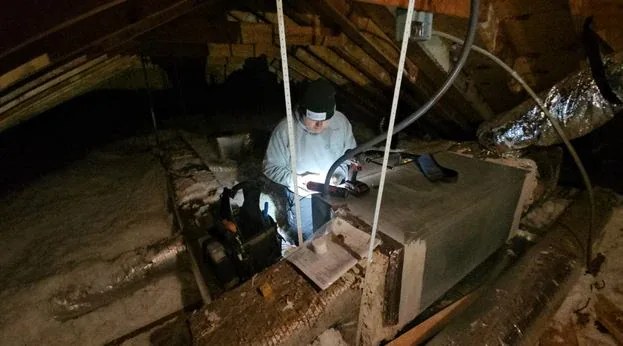
Many local homes have furnaces in a crawl space or a damp garage. Moisture there can rust flue pipes and burner parts faster than you’d expect. A vent pipe that looks fine from the hallway can be pitted or separated where it runs under the house. We’ve seen it plenty.
Here’s what matters: the furnace doesn’t live alone. A wet crawl space can shorten its life. Leaky ducts can pull in dirty air. Poor attic insulation and air sealing can make the system run longer and work harder than it should. Fixing the furnace while ignoring the house is like treating a cough while standing in the rain.
Storm Season Brings a Second CO Risk
When a nor’easter or hurricane knocks out power, people reach for portable generators. Every year, folks get sick from running one in a garage or too close to a window. It’s heartbreaking, and it’s avoidable.
A permanently installed whole-home generator sits outside and is set up to vent safely. Paired with regular generator maintenance, it keeps your heat, medical devices, and fridge running without the gamble.
Warning Signs Your Furnace Needs Help Now
Some problems can wait for your yearly visit. Others can’t. Watch for these red flags and call for service right away if you notice them.
A yellow or orange burner flame, instead of a steady blue, is one of the big ones. So is soot or black streaks around the furnace door or vent pipe. Heavy condensation on windows when the heat runs can point to exhaust trouble, too.
Strange sounds deserve attention. Banging, rumbling after the burners shut off, or a loud “whoosh” at startup can mean delayed ignition. A furnace that turns on and off every few minutes is also worth a call. And if your CO alarm goes off, even once? Leave the house first and ask questions later.
The Exception: Electric Heat and Heat Pumps
If your home runs only on electric heat or a heat pump, the furnace itself won’t make CO. That’s good news. But you’re not totally in the clear. A gas water heater, gas stove, fireplace, or attached garage can still be a source. CO detectors still belong in your home.
Furnace Maintenance Made Easier When You’re Aging in Place
Staying in your own home is a wonderful goal. It also means thinking ahead about tasks that get harder with time.
Changing a furnace filter sounds simple. But if your unit sits in a tight attic, up a ladder, or down in a crawl space, it’s a real fall risk. Falls are one of the leading causes of injury for older adults. No filter is worth a broken hip. A maintenance plan that includes filter checks takes that chore off your plate.
It also helps to think about who else is watching. If you live alone, share your service schedule with an adult child or a trusted neighbor. Ask your technician to explain findings in plain words, and request photos so family can see them too. A good tech won’t rush you or talk down to you.
Small Upgrades That Make a Big Difference
A few simple changes can make heating safer and easier. A thermostat with a large, backlit screen helps if your eyesight has changed. Smart models can even alert a family member if the house gets too cold.
CO detectors with a digital readout show low levels before the alarm sounds. Place one on every floor and near each sleeping area. Most last about 7 to 10 years, so check the date printed on the back. If you can’t find a date, it’s probably time for a new one.
Better indoor air quality also matters, especially if you have asthma, COPD, or allergies.
How Fusion Home Services Approaches Furnace Safety
At Fusion Home Services, we started as a heating, air, and insulation company. That background shapes how we work. We don’t just look at the box in the closet. We look at how your whole home affects it, from the crawl space to the attic.
That means finding the root cause first. If your furnace keeps overheating, we want to know why. Is it a dirty filter? Undersized ducts? A damp crawl space rusting parts? Fixing the real problem is how we get it done right the first time, so you’re not calling us back next month.
Our NATE-certified technicians handle furnace repair and replacement, along with routine tune-ups. And if your system is past saving, we’ll walk you through heating installation options and financing without pressure.
The Fusion Family Maintenance Plan
The easiest way to stay on track is a plan that remembers for you. A Fusion Family Maintenance plan schedules your heating and cooling tune-ups, so nothing slips through the cracks. Any equipment we install also comes with a free first year of maintenance.
For many seniors, that means one less thing to track. And honestly? That relief is worth a lot.
Frequently Asked Questions
How often should seniors schedule furnace maintenance?
Once a year, ideally in early fall before heavy use. Homes with furnaces over 15 years old, in damp crawl spaces, or near the coast may benefit from an extra mid-winter check. Rust and moisture can speed up wear on vent pipes and burners in Hampton Roads.
Can a furnace leak carbon monoxide even if it’s heating fine?
Yes. A furnace can blow warm air while a cracked heat exchanger or blocked flue lets CO escape. Heating performance tells you nothing about combustion safety. Only a combustion test and a close inspection of the heat exchanger and vent can confirm it’s safe.
What should a furnace tune-up include to check for carbon monoxide?
Ask for a combustion analysis that measures CO in the exhaust, a heat exchanger inspection, a flue and vent check, and safety switch testing. If your technician only changes the filter, you haven’t had a full safety check.
Is furnace maintenance worth it on an older system I plan to replace soon?
Usually, yes. Even a few more winters of use carries CO risk if the system isn’t checked. An inspection also tells you whether replacing it can wait until spring or should happen now. That helps you budget instead of reacting in an emergency.
Warm, Safe, and Staying Put
Staying in your home through your retirement years is something to protect. Regular furnace maintenance is one of the simplest ways to do it.
Let’s recap. CO is invisible, and older adults feel its effects sooner. A real tune-up checks combustion, the heat exchanger, and the venting, not just the filter. Coastal humidity and crawl-space installs add wear you can’t always see. Working CO detectors on every level are your last line of defense. And a maintenance plan takes the ladders and the guesswork off your plate.
You don’t have to figure this out alone. Fusion Home Services treats your house as one connected system, so we catch problems other companies miss. Ready for a furnace check before the cold settles in? Contact us or call (757) 938-6709. When it comes to your family’s safety, Call Fusion First, and let Fusion Home Services handle the rest.