Is Your Old Furnace Quietly Draining Your Wallet?
It’s the first cold night of the year. You flip the thermostat to heat. Click. Another click. Then nothing.
Sound familiar?
If your gas furnace is more than 10 years old, that moment fills you with dread. Last winter it was an igniter. The year before, a motor. Every repair costs more than the last, and you’re starting to wonder if you’re just feeding money into a metal box in the attic.
Here’s the thing: you’re not imagining it. Older furnaces do cost more to keep alive. But the right kind of furnace maintenance can slow that slide down, catch small problems before they turn into big bills, and tell you (honestly) when it’s time to stop repairing.
In this guide, you’ll learn which parts wear out first on an aging gas furnace, what a real tune-up should include, why coastal Virginia homes wear furnaces out in their own special way, and how to know when repair stops making sense.

Why Do Repair Bills Climb After Year 10?
Most gas furnaces are built to last about 15 to 20 years. Around year 10, you hit the middle of that life. That’s when parts that have been heating up and cooling down thousands of times start to give out.
Think of it like a car with 120,000 miles. The engine still runs. But now it’s belts, hoses, and water pumps, one after another.
Your furnace is no different. Each heating cycle stretches and shrinks the metal inside. Motors spin millions of times. Sensors get coated with grime. It sneaks up on you.
The Parts That Wear Out First
Below is a quick look at the parts we see fail most often on furnaces over 10 years old. The costs are typical national ranges for parts and labor. Your price will depend on your furnace brand, where it sits in your home, and how easy it is to reach.
| Part | Warning Sign You’ll Notice | What a Tune-Up Catches | Typical Repair Cost |
|---|---|---|---|
| Flame sensor | Burners light, then shut off after a few seconds | Carbon buildup that can be cleaned in minutes | $100–$250 |
| Hot surface igniter | Clicking, but no flame | Hairline cracks and weak resistance readings | $150–$400 |
| Blower motor capacitor | Humming, slow start, weak airflow | A capacitor testing below its rated value | $150–$350 |
| Inducer motor | Loud whine or rattle at startup | Worn bearings and noisy startup | $400–$1,000 |
| Blower motor | Weak or no airflow at vents | High amp draw, dirty wheel, worn bearings | $400–$1,500 |
| Control board | Random shutdowns, blinking error codes | Stored error codes and loose wires | $300–$900 |
| Heat exchanger | Soot, odd smells, CO alarm going off | Cracks, rust, and flame rollout | $1,500–$3,500+ (often means replacement) |
Look at the top half of that table. Those are cheap fixes when caught early. Left alone, a dirty flame sensor can leave you with no heat on a Saturday night, paying emergency rates. You’re not stopping wear. You’re catching it while it’s still small.
What Real Furnace Maintenance Looks Like on an Older System
Some tune-ups are a filter swap, a glance at the flame, and a bill. That’s not maintenance. That’s a drive-by. On a furnace over 10 years old, more parts are close to failing, so the visit needs to go deeper.
Safety Comes First
The most important thing a tech checks on an aging gas furnace is the heat exchanger. It’s the metal wall that keeps flames and exhaust gases away from the air you breathe. When it cracks, carbon monoxide can get into your home.
A good tech will inspect the heat exchanger with a light or camera, watch how the flame behaves when the blower kicks on, test for carbon monoxide, and make sure your flue pulls exhaust out of the house. No working CO alarm near your bedrooms? Please add one.

Measuring, Not Guessing
Here’s what separates a real tune-up from a quick look. Numbers.
A trained tech should measure gas pressure, temperature rise, and amp draw on each motor. A blower pulling too much power is often a motor on its way out. A temperature rise outside the maker’s range can point to a clogged filter or undersized ducts.
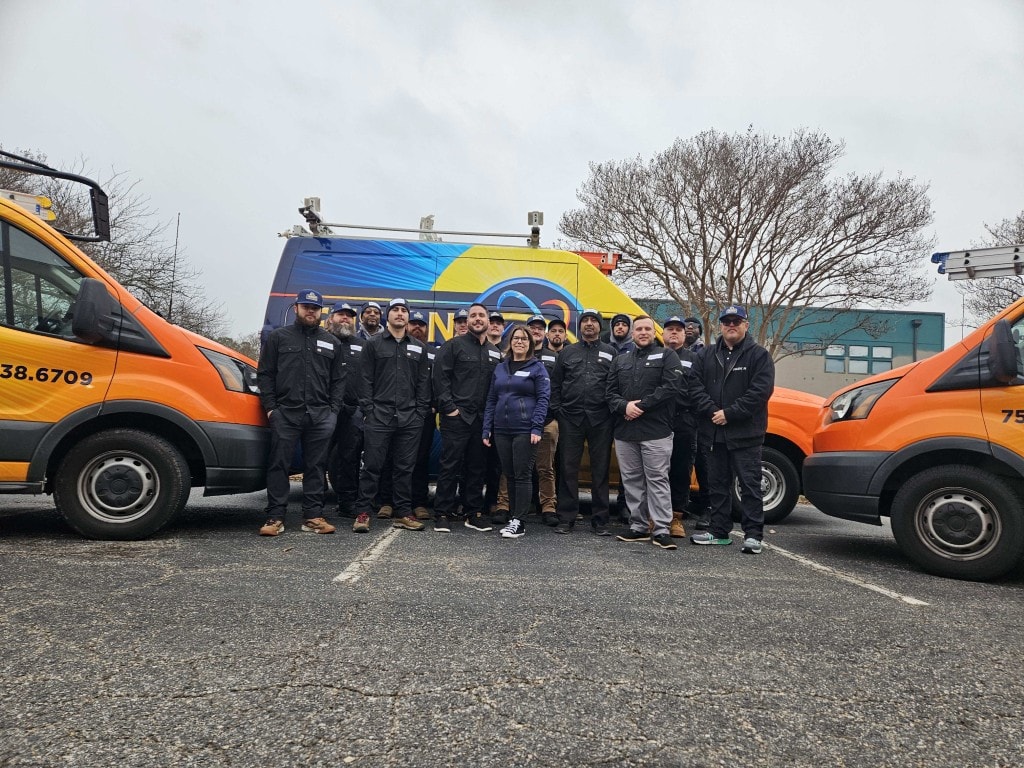
At Fusion Home Services, our NATE-certified techs write those numbers down each year. That way, we can compare this winter to last winter and spot a part that’s slowly getting worse, instead of just reacting when it quits.
The Cleaning and Tightening Nobody Sees
The rest of the visit is the less exciting stuff that keeps a furnace alive. Cleaning the flame sensor and burners. Checking the igniter. Tightening electrical connections that loosen over years of heating and cooling. Clearing the condensate drain on high-efficiency models, which can clog and shut the whole system down.
Not glamorous. But it’s often the difference between a furnace that makes it through winter and one that doesn’t. Want to see what a full visit includes? Take a look at our HVAC maintenance plans.
The Coastal Virginia Problem Most Guides Skip
Here’s what matters if you live in Hampton Roads. Your furnace doesn’t just fight cold. It fights moisture.
Many local homes have their furnace or ductwork in a crawl space or attic. And coastal air is damp for much of the year. In a vented crawl space, that damp air settles right onto metal parts that were never meant to stay wet.
The result? Rust on burners. Corrosion on the gas valve and electrical connections. And in the worst cases, rust that eats through the heat exchanger years early. We’ve seen furnaces that should have had a decade of life left, cut short by a wet crawl space.
This is where whole-home thinking pays off. If your furnace sits in a damp crawl space, a new igniter won’t fix the real problem. The moisture will just keep attacking the next part. Sealing things up with crawl space encapsulation and insulation protects the equipment, and it can make your floors warmer too.
The same goes for your attic. If heat is leaking out through thin insulation or gaps around lights and vents, your furnace runs longer to keep up. Longer run times mean more wear on every part in that table above. Attic insulation and air sealing cuts that workload down.
Look, Fusion Home Services started as an insulation and air sealing company. So we don’t see your furnace as a box on its own. It’s one piece of a system that includes your ducts, your attic, and the house it’s trying to heat.
When Does Repair Stop Making Sense?
You don’t want to sink money into a furnace that dies next year. You also don’t want to buy a new one if the old one has life left. It’s frustrating, and it can feel like everyone has something to sell you.
So here are two simple rules we share with our own customers.
The 50% Rule
If a single repair costs more than half the price of a new furnace, replacement usually makes more sense. This is especially true once your furnace is past 12 or 15 years old.
The $5,000 Rule
Multiply the age of your furnace by the repair cost. If the answer is over $5,000, lean toward replacing it.
Say your furnace is 14 years old and needs a $450 inducer motor. That’s 14 × $450 = $6,300. That’s over the line, so replacing it is worth a serious look.
Now say your furnace is 11 years old and needs a $180 igniter. That’s $1,980. Fix it and move on.
The Exceptions
These rules are a starting point, not a verdict. They don’t work if your heat exchanger is cracked. That’s a safety issue, and in most cases it means replacement, period.
The other exception runs the opposite way. Some well-kept furnaces at 16 or 18 years old still run clean and safe. If yours has had yearly maintenance, still heats your home evenly, and your bills haven’t jumped, there may be no rush. Age alone isn’t a reason to replace.
If you’re leaning toward new equipment, it’s worth asking whether a heat pump fits your home. Our winters are mild enough that many Hampton Roads homeowners pair a heat pump with a gas furnace backup or move away from gas entirely. You can learn more about your options on our furnace repair and replacement page, and financing can help spread the cost out.
Small Habits That Buy Your Furnace More Time
Between yearly visits, a few easy habits help an older furnace a lot.
Change your filter every one to three months. A clogged filter makes an old blower motor work harder and can cause the furnace to overheat and shut off. Got pets? Check it monthly.
Keep boxes and paint cans away from the unit. Listen for new sounds, like a squeal or a bang at startup, and call before they turn into a no-heat night. And watch your gas bill. If it climbs while the weather stays the same, something’s off.
Frequently Asked Questions
How often should an older gas furnace get maintenance?
At least once a year, ideally in early fall before heavy use starts. Furnaces over 15 years old, or ones sitting in damp crawl spaces, benefit from a closer look, since rust and wear move faster there.
Can furnace maintenance really lower my repair costs?
Yes, mostly by catching cheap problems before they cause expensive ones. A dirty flame sensor or weak capacitor costs little to fix during a tune-up. Left alone, the same issue can strain other parts and lead to an emergency call at after-hours rates.
Is it safe to keep running a 20-year-old furnace?
It can be, if a trained tech has checked the heat exchanger and tested for carbon monoxide recently. Age raises the risk of cracks, so yearly safety checks matter more as the furnace gets older. Always keep working CO alarms in your home.
What’s the difference between a tune-up and a whole-home check?
A tune-up looks at the furnace itself. A whole-home check also looks at the ducts, attic, and crawl space that control how hard your furnace works. In older homes, that bigger view often explains repeat breakdowns.
Your Furnace Deserves More Than a Guess
An older gas furnace doesn’t have to be a money pit. But it does need more than a quick filter swap and a pat on the back.
Here’s what to remember. Parts wear out on a predictable path after year 10, and catching them early is far cheaper than waiting. Real furnace maintenance means safety checks and measurements, not just cleaning. Coastal moisture and a leaky attic can age your furnace years early. And the 50% and $5,000 rules help you decide between repair and replacement without feeling pushed.
You shouldn’t have to feel anxious every time the heat kicks on.
At Fusion Home Services, we look at your whole home, find the real reason your furnace is struggling, and give you a straight answer on whether to repair it or replace it. If we install a new system, the first year of maintenance is on us, and it’s backed by our one-year satisfaction guarantee.
Ready to find out how much life your furnace has left? Schedule your furnace tune-up before the cold sets in. Get it done right the first time. Call Fusion First at (757) 938-6709.